PhD Thesis
Politics Undercover: Understanding the role of social media personalities in the development of adolescents’ political self
Doctoral dissertation
KU Leuven, Faculty of Social Sciences
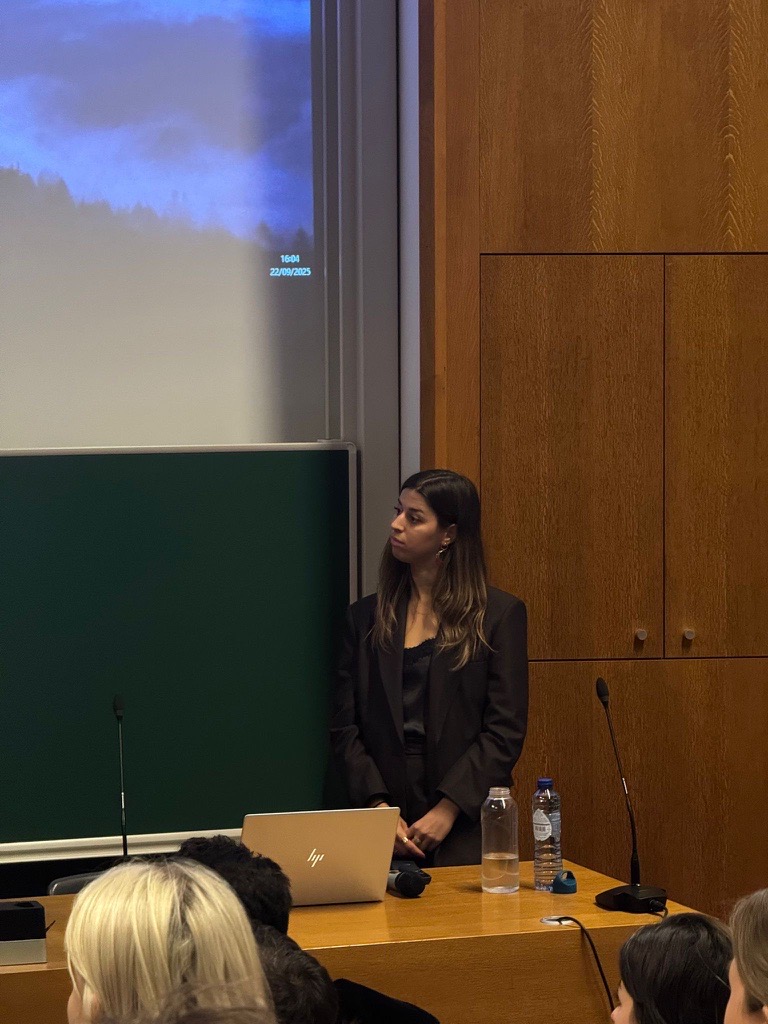
Defense date: 22 September 2025
Author: Dr. Anaëlle Gonzalez
Supervisor: Prof. Dr. Laura Vandenbosch
Summary
Over the past decade, social media platforms have become deeply embedded in adolescents’ daily lives, shaping how they communicate, explore their identity, and engage with the world around them. These platforms have radically expanded the ways individuals can connect across spatial and temporal boundaries, offering adolescents ample opportunities to observe a diverse set of mediated figures, such as influencers, celebrities, and athletes, who function as aspirational role models. Once relegated to the entertainment sector, these social media personalities (SMPs) now increasingly take positions on sociopolitical issues. Their accessible communication styles and consistent presence in adolescents’ personalized media feeds have led young people to rely on them more heavily to make sense of social and political issues. While they are anecdotally known to share political messages, SMPs are less often recognized for their representations of broader moral and personal values that carry political relevance. Through their role as admired and relatable models who embody qualities valued by adolescents, SMPs may shape perceptions of what is desirable, normative, and attainable in the political domain. Compared to traditional news media, their unique characteristics position them as potential bridges between disengaged youth and political life, offering new avenues for democratic socialization during a critical developmental period. Yet despite their growing relevance, empirical research on the political content of SMPs and its impact on adolescents remains remarkably limited.
To understand whether and how SMPs may shape the political self of contemporary adolescents, it is essential first to examine the presence of politically socializing messages in their content and then to explore the potential internalization of such messages. This dissertation addresses that task by investigating the role of SMPs in the political development of adolescents aged 11 to 19, guided by two central research questions: (1) What types of political, moral, and value-based messages do SMPs convey through their content? and (2) how is exposure to such content reciprocally related to changes in adolescents’ political cognitions, motivations, and behaviors over time? Combining large-scale content analyses with multi-wave longitudinal panel studies conducted in France and Belgium, the dissertation provides a comprehensive and methodologically rigorous investigation of SMPs as emerging agents of political socialization in adolescence.
Chapters 1 to 3 start by mapping the landscape of political, value-laden, and moral representations in the Instagram content of 60 highly-followed Western SMPs, comprising 20 celebrities, 20 athletes, and 20 influencers with an equivalent gender ratio, based on a systematic analysis of 4,192 posts and stories shared during October 2020. Using multilevel binomial regression analyses, Chapter 1 shows that although the majority of SMPs (81%) shared at least one political message, such content made up only a small proportion of their overall output (7.8%). Political posts were more likely to focus on lifestyle-related issues (e.g., health policy, 57%) than on formal political processes or actors (49%). Chapters 2 and 3 build on this dataset to investigate the presence of personal and moral values. All SMPs expressed personal values, and the vast majority also communicated moral values, with personal values present in 60.3% of posts and moral values in 15.1%. The most frequently portrayed personal values were achievement (25.3%), benevolence (22%), and hedonism (20.2%), while moral content primarily reflected the foundations of care (10.9%) and loyalty (4.1%). Notably, moral messages almost exclusively upheld normative values rather than depicting violations, reflecting Instagram’s positivity bias. The expression of political, personal, and moral content further varied by SMP type, gender, and platform feature (e.g., post vs. story). Together, these chapters demonstrate that adolescents are immersed in a complex symbolic ecosystem where political, personal, and moral cues are embedded within, and often shaped by, the commercial and aesthetic logics of Instagram as well as influencer and celebrity culture.
Chapters 4 to 6 transition from mapping content to examining effects by assessing how exposure to SMPs’ political content may influence adolescents’ political self, operationalized through indicators such as political interest, political self-efficacy, attitudes, norms, and behaviors. Chapters 4 and 5 draw on a three-wave longitudinal panel study of French adolescents (n = 520—648, Mage = 15.14—15.21, SDage = 1.89—1.90, girls = 56.6%—58.7%), conducted over one year with four-month intervals. Chapter 4 investigates reciprocal associations between exposure to favorite SMPs and political self-efficacy, while Chapter 5 focuses on political interest. In Chapter 5, adolescents’ survey responses are also paired with a second content analysis of the political content shared by their favorite SMPs (N = 303), allowing for a triangulated operationalization of exposure. Both chapters employed random-intercept cross-lagged panel models and a series of robustness checks, to disentangle inter-individual differences from intra-individual changes. Despite consistent between-person associations—indicating that adolescents who report higher exposure to politically engaged SMPs also tend to report higher political self-efficacy and interest—no within-person effects were observed. This suggests that changes in exposure did not lead to measurable intra-individual changes in the political self over time. Moreover, neither the type of SMP (e.g., influencer vs. celebrity), nor individual cognitive processing style (Chapter 4), nor contextual moderators such as peer or parental political interest (Chapter 5) significantly shaped these associations.
Chapter 6 complements these findings through a two-wave panel study conducted among Flemish adolescents (n = 657, Mage = 15.59, SDage = 1.27, girls = 68.2%), focusing specifically on pro-environmental political content. This chapter extends the analysis beyond passive exposure to include interactive forms of engagement, such as liking, commenting, and sharing. Using structural equation modelling, we found that while adolescents reported moderate to high levels of pro-environmental attitudes, norms, and behaviors, no significant associations were found between exposure to political content and these outcomes. The only exception was a small positive relationship between liking such content and pro-environmental attitudes. Together, these chapters provide converging evidence that exposure to SMPs’ political content—whether measured through self-reports or combined with content analysis—does not produce intra-individual changes in adolescents’ political self over time.
While SMPs have increasingly been considered as a central resource for the development of youth’s political engagement, the current PhD dissertation nuances this assumption by providing the first systematic evidence on their content and long-term effects. The findings reveal that political content shared by SMPs is relatively low, while value-laden and moral messages are far more prevalent—albeit highly curated. Adolescents’ favorite SMPs are highly fragmented and rarely politicized, and their political content preferences appear more reflective of existing dispositions than transformative influences. Indeed, associations between exposure to SMPs and adolescents’ political self-efficacy and interest emerge only at the between-person level, with no evidence of within-person change over time. These findings underscore the stability of adolescents’ political self and the limited potential for incidental, fragmented, or unpredictable exposure to SMPs’ political content—typical of today’s highly personalized and saturated media environments—to induce meaningful change. They further highlight the methodological importance of employing multi-wave, intra-individual panel designs to disentangle genuine media effects from selection processes. Looking ahead, this dissertation sets a research agenda that calls for greater attention to adolescents’ subjective understandings of politics, the granularity of links between specific media exposures and general political outcomes, the timing and accumulation of media effects, and the need for person-specific and person-centered approaches for understanding evolving political socialization practices.
Reference
Gonzalez, A., & Vandenbosch, L. (Supervisor). (2025). Politics Undercover: Understanding the role of social media personalities in the development of adolescents’ political self. Doctoral dissertation. KU Leuven. https://kuleuven.limo.libis.be/discovery/fulldisplay?docid=alma9995884962701488&context=L&vid=32KUL_KUL:KULeuven